Type of
production:
For this first production, I and my group were set the task
of creating a short story in under 90 seconds. This was to be entered into the
‘Depict’ competition which challenges up and coming film makers/writers to
produce a short, unique and believable story in a set maximum time of 90
seconds.
I and my fellow group members put 2 ideas forward each. We
finally came to the conclusion of producing a hard hitting story. We decided
this due to the fact that many shorts are going to be entered into the
competition and we needed to grab the judges and viewers’ attention with
something that we intended to be a unique and believable short.

After going backwards and forth with several different variations of an idea, we decided to create a short in which the main character is having a conversation in which he is telling his ‘daughter’ that everything would be okay and the ‘monsters’ would not get her. A very normal and real life situation. However our final twist was that there was no daughter and the father was talking to an empty bed. The aim here was to show the fact that the daughter wasn't there anymore. We also put in one more final twist. The final twist happens when the camera pans out of the room and there’s a hostage which is revealed to of been the daughters ‘murderer’ through speech.
Depict's official logo.
After going backwards and forth with several different variations of an idea, we decided to create a short in which the main character is having a conversation in which he is telling his ‘daughter’ that everything would be okay and the ‘monsters’ would not get her. A very normal and real life situation. However our final twist was that there was no daughter and the father was talking to an empty bed. The aim here was to show the fact that the daughter wasn't there anymore. We also put in one more final twist. The final twist happens when the camera pans out of the room and there’s a hostage which is revealed to of been the daughters ‘murderer’ through speech.

As our production was produced on an extremely low budget there were very minimal distribution
methods at our disposal. However we were able to upload our short to arguably the biggest media source in the world. YouTube. We were also able to distribute information about our short through the blogging website ‘Blogger’ Blogger allowed people to read and find out information about our short weeks before it had even been developed, this allowed us to have a sort of head start with our avid blog readers coming back to read and eventually watch our shorts. Being able to distribute the short through YouTube allowed us to have a potential audience of over 1 billion people; this isn't possible with any other distributor in the world

The homepage of the site we will be sharing our video to. YouTube.
Although we were able to upload our clip to YouTube, we unfortunately didn't have a big budget to advertise it. This therefore meant that many distribution outlets were unobtainable to us. For example, big budget movies have big advertising campaigns in which their movies are distributed worldwide daily. For example, on the sides of buses, on television, even using paid YouTube advertising to reach billions daily. Furthermore we could have potentially entered other paid short competitions as there are many out there, this would of ramped up the interest in our short as it would have been viewed by more people than just the one entry.

We unfortunately were very low on sources for
finance. We were simply handed a £5 budget which was not very easy to work with
at all. Putting it into perspective. The 2009 Hollywood blockbuster Avatar had a budget of $237 million. This
means that Avatar’s budget is an extortionate 4740000 x bigger than ours was.
Due to the massive budgets that movies like Avatar have we simply could not
compete. This meant that our effects, props and locations would have to be
‘affordable’ whereas big movie studies have the world as their oyster.

Avatar, the $237,000,00 budget movie.
Furthermore
we were not able to receive funding from other means such as:
Government
funding: The Government now fund many small time movie
makers’ movies helping them get a foothold in the industry. However we were not
able to receive this as we were simply working from college so sadly we
wouldn’t have been taken into serious consideration.

Brihonnola, an example of a film which gained Government funding.
UK
Tax finance: This works by compiling a business plan that will shine through in a
tight market with many competitors. This is a very hard route as many people
have caught onto it trying to catch their big break into the film industry.
Once again we simply could not do this as we didn’t have time to produce a
business plan good enough in the time space we were allocated.
Product placement: Product placement is an extremely
good way for film makers to get funding for their movies. The way this works is
that a company pays the film makers for their product to feature in the movie.
A great example of this is Heineken paying the makers of Sky fall $50,000,000
to turn James Bond into someone who drinks their beer. However once again we
could not receive this funding due to the fact that no company would be able to
consider funding our film viable as it would be too much of a risk to be seen
by a large enough audience.

A scene in which Bond drinks Heineken.
Crowd funding:
Perhaps the only way we could of genuinely raised funds would have been to have
used a crowd funding source such as ‘Kick-starter’
this would have been a great way to raise funds as sites such as kick-starter
help fund thousands of indie projects. However we would of either had to of had
some genius marketing campaign to share it about quickly, or to of had it up
for ages before it received any kind of noteworthy attention. We unfortunately
could not have done either, this is due to: Time limitations and a lack of
knowledge on the internet marketing front.

Here is an example of a successful kick starter the Game Stick.
All in all, in terms of financing
our short we were stuck with a £5 budget with no realistic way of improving it.
However with a longer time scale we could of maybe of been able to have begun a
kick-starter campaign like this one: A
small time movie project being funded on kick-starter. However, as previously
stated, time was a massive issue for us in many ways, and it was a big factor
in terms of trying to get finances. In conclusion, we would have been able to
produce a much higher standard of movie with more funding. However we were
simply not able to match the big Hollywood studios due to the fact of many
limitations.
Personnel:
Our group consisted of 3 members:
Myself: I personally had never been on a team in terms of attempting to produce a movie. However I did have past experience in front of a camera. This can be found here. I have also edited many short clips and I know basic editing skills so I should have been able to put something forward to the group in that sense. I was able to make any date for filming/editing due to the fact I am never usually tied down by things going on, this was handy due to the fact that we were filming 2 hours away from my house so I had to be prepared for a long bus journey. Sadly a lot of our budget was used on actually transporting me to our filming location; this meant that we had to cut back on some props in which we were thinking about potentially using. However the group thought this decision was viable as all 3 of us needed to be there at the time of filming to ensure that we were all happy with what we were producing. Finally, due to previous experience in front of a camera I was quite confident in front of one before we began this short. This enabled me to guide others on how to be more confident in front of the camera.

Here is an example of one of my past media experiences on the site YouTube
Connor: Having Connor on our team was perhaps the biggest asset we were able to get. He had past experience both in front of and behind the camera. This can be found here. He had also had extensive editing experience with the software we had to work with so we also found that he was an asset to us in more ways than one. Furthermore he was also able to play the part of the main character in our short to the fact that he had portrayed the character of a Father before so he was able to slot and adjust into the role perfectly. Just like Myself, Connor was available on a wide basis; this meant that it was a lot less stressful when preparing filming. However, just like myself, Connor also lived a fair distance away from our filming location, this also meant that our budget was eaten into for bus travel and so forth. Finally, Connor also had experience working with a lot of the equipment we were using and also had a state of the art microphone, this was great for us as it cancelled out a lot of background noise which helped us to set a more realistic and believable scene.

Here is an example of Connors work as a director.
Annie: Annie was not as experienced as myself and Connor in terms of film making. However this did not hinder our group whatsoever, this is due to the fact that she quickly adapted to her role and learnt the skills quickly. A big asset in which Annie provided was our location for filming. We were able to use her house as it had the sweet, innocence of a girl’s bedroom in which we were looking for, and it also had a dark, sinister looking room in which was also vital for our twist at the end. Just like myself and Connor, Annie was also available a lot of the time. The fact that all 3 of our group members were available at the same time meant that sorting a filming day was not stressful at all.
In fact, we were able to get our
entry filmed a week before the other groups had started filming. We felt as a
group that this would be a massive help to us, due to the fact that we had a
lot to edit to ensure that our short was not only believable but watchable. Furthermore, we wanted to be able to focus on our editing process as a group
together, so the fact that we had our clips sorted before the other groups had
even began meant that whilst they were filming we could be editing in peace,
this meant that we could have a solid and focused working platform.
Facilities: For any media production, big or small, ensuring you have the right facilities is vital. It is not only small production movies in which have problems finding the right location to shoot. Many big budget productions encounter problems with their facilities. In fact many change location after they have begun shooting. An example of problems with movies facilities can be found here. These problems are the harsh reality of what can happen if a movie set is not correct. So it was vital that we ensured that our location not only set the scene, but also ensured the safety of all involved.
First of all, we needed to make sure
that our facilities would be realistic and that the viewer would be engrossed
and believe what is happening on screen.

Furthermore it was vital that the facilities we were going to use could compensate for the staff and props we were going to need. This is due to the fact that if there’s too much or too little going on, on the screen at once then the viewer may lose interest and not believe or be engrossed by the plot.
An example of a movie set which has been used in the past.
Furthermore it was vital that the facilities we were going to use could compensate for the staff and props we were going to need. This is due to the fact that if there’s too much or too little going on, on the screen at once then the viewer may lose interest and not believe or be engrossed by the plot.
The facility we decided to use was
our group member Annie’s house. The reasoning behind this was due to the fact
that it already had a girl’s room which meant that it already ticked one box.
It also had a lot of space to work with inside the girl’s room; this meant that
we could fit a camera in the room and still have space to work our plot around.

The facility also had a dark, garage in which had cobwebs, and mould in it, this allowed us to paint the picture of the person who is ‘trapped’ actually being a genuine hostage. The facility also had sufficient lighting throughout.
A bedroom very similar to the one in which we used to create our scene.
The facility also had a dark, garage in which had cobwebs, and mould in it, this allowed us to paint the picture of the person who is ‘trapped’ actually being a genuine hostage. The facility also had sufficient lighting throughout.
Finally, the location would not be out of reach for any of our group members, this was vital, as we were able to base our shooting days around our location. This, rather than having to organise one day at a location a long way away from all of us.
To summarise, it is vital for all media productions that the
location is right and suits what is being produced. We feel that we did the
best with not only our budget but also our surroundings, this was the only
location that we looked at that we all thought would work, and work to the standard we wanted it to.
Materials: We had to obtain a few materials and props for our production. We firstly had to realise that we were extremely strapped for cash, so we knew we would not be able to purchase any new props. We had to make do with props that we could locate from around our houses. The most important props in which we located were children’s toys such as: dolls, and cuddly toys. These needed to be used as props for our production due to the fact that we needed to set the scene of a young child’s bedroom and without the props we used, we would not of been able to set the scene correctly.

For bigger budget movies they spend millions upon millions to achieve what they feel is the right scene. A key example of this is the majority of the James Bond film series. With budgets of well over £100 million each time, they are able to create a much bigger and better scene and story than we were with our budget, due to the fact that after bus travel our budget was non-existent.
We were able to obtain other materials other than just props
as well.

We needed to ensure that the actors were wearing believable clothes
for their roles. I was personally an actor in the short, so it was vital that
the clothes I was wearing were ideal for the role I was playing, this is the
same with Connor, the groups other member also had an acting role. His role was
to portray someone who was much older than he is. It was vital that we ensured
he was wearing the right clothes to help portray his character believably.
Here is perhaps one of the most iconic props of all time. The Golden Gun.
We needed our paperwork on set; these were vital bits of material to us. If we didn’t have our script or shot list on set then we would not be able to film adequately. Furthermore if we did not have our Recce with us then we would not have been able to film as we would not have the adequate permission.
An example of a film in which gathered materials for a lot of its work is: Civvy Street. This is a short film in which one of my college teachers made. He had to source props for his production. His budget was £500 which is 100x the budget in which we had. This allowed him to source better props. The only props in which he sourced were: Guns for his soldiers – He had a lot of trouble in getting the correct permission to use these however. This is due to the fact that he would need to alert the council and the police that the ‘guns’ in which he was using were indeed fake and that he was not a threat to the people who were innocent people passing by.

Furthermore he needed to ensure that he had the correct paperwork with him at all time, this would ensure that the people near him would not rush to call for help as soon as this random man got out his gun.
Cost was a big factor in sourcing out materials. This is due
to the fact that we only had a minimalistic budget, this in turn meant that we
had to buy materials in which would not cost a lot.
Finally, we needed to use petrol to travel to the place in
which we were going to shoot. Furthermore I needed travel documentation so that
I could travel to my location stress free and without receiving any
interruptions throughout.
Legal
issues: It is vitally important to any media production that
everything used in a media production is done legally and is not stolen from
other people. It is of up most importance that the work you are producing is
your own and if you are using someone else’s you have not only the permission
to use it but also the correct documentation to prove this.
The reasoning behind this is the fact that if the copyright
guidelines are not followed carefully and exactly then serious repercussions
can occur. For example: A lawsuit and potentially a lengthy jail sentence. This
isn’t only an occurrence for smaller productions such as ours. But also for
productions on a much larger scale, here are some examples of big budget
Hollywood movies coming under fire in court cases.

Here is an example of a recent, famous court case regarding copyright infringement.
However, this is a more frequent occurrence in movies of our scale. This is due to the fact that smaller budgets means that small directors simply can’t get permission to use bigger budgets scores and so forth. So to counter act this, they steal scores and other things from other movies to save money and give their movies a big budget feel.
Copyright is something which helps to protect
peoples work, this is so that no one else can use it without the correct
permissions and paperwork showing that they have the permission. Copyright is
automatically given in many ways throughout many creative platforms. However
the ones which would apply to us are: Film and television recordings and
sound and music recordings. These ones matter to us as we were creating a new
film from scratch, this in turn meant that we had to read the exact guidelines
for these rules in ensuring that we didn’t steal any work wrongly from any
other composers or screenwriters.
Copyright
protects peoples work exactly by these means: If people are too straight up
copy someone’s work then this is plagiarism, this means that they have stolen
another person’s work, and have broken the copyright law. Also if people are to
distribute copies of someone else’s work then this is also copyright as they
are taking the rights from the person wrongly. Whether this be for money, free
of charge or renting it to someone. This is still a copyright infringement.
Furthermore, if someone else is to do an adaptation of your work (for example
the 2001 re-imagining of planet of the apes) then they need to have had your
permission and not just gone straight into it as this is copyright.

Finally, if
someone wrongly puts your work on the internet then they have also broken a
copyright law, due to the fact that they are once again distributing your work
without the correct permission. This
information was gathered here.
Here is a poster for the 2001 Planet Of The Apes.
During the
pre-production of ‘Sweet dreams’ we were all giving different ideas on what we
would of liked the score to be on our short. However, a lot of the suggestions
would have been breaking copyright laws, due to the fact that they were from
big budget movies. However we were able to avoid breaking any copyright laws,
due to the fact that we managed to find a score that fitted our short perfectly
off of a royalty free website. Royalty free websites are vital to helping out
small productions, this is due to the fact that they provide free, originally
composed music and un-copyrighted.
Clearance: When producing any media production,
the only way for it to be distributed and shown to the public is if it have
been ‘cleared’ (or given the correct clearance) this means that you have
received written permission that everything in your production is okay to be
used and has been done correctly and followed copyright laws. For example: If a
media production is produced and shown to the public without the correct
clearance, it will be taken down and a court case may very well be began, as
the thing that has been published has not been done so with the correct
permission. On the other hand, if a production is yet to of been published and
has been told to change something is this isn’t allowed, then they can then
change that before publishing. This would then meet guidelines and no law would
be broken.

Public liability insurance: Public liability insurance
covers the legal responsibilities of a production. For example, if an activity
during production was to harm/break a third party item or property. Then public
liability insurance would cover this and ensure that you are ensured. It is
generally seen as being best when kept throughout the whole pre-production
period, this would then ensure that any event that occurs during the production
of the media product will be covered, instead of ending up as a major cost to
the film maker. However, due to the fact that our group consisted of students,
this meant that we were covered by our college, this meant that we could focus
solely on our project and not worry about sorting out third party insurance.

A certificate in which is sent once you have public liability insurance
Completion guarantee/insurance: A completion guarantee is a form of insurance most commonly used by independently financed films (such as Sweet dreams) this is to help guarantee that the producer will deliver the film on time and not miss their set deadline. If the set target that is agreed on is met then the director only has to pay an agreed on minimum fee, this in – turn then allows them to save money as long as they hit their deadline. However, If the deadline is missed, then the fee increases significantly, therefore causing the fee to rise significantly, which hinders the director, as they are most commonly working to an extremely tight budget. "This method of funding can be complicated and expensive due to legal, bank fees and interest. The bond fee itself is negotiable—typically 3–5% depending on the risks as assessed by the completion guarantor. For these reasons, completion bonds are typically used on mid- to high-budget independent films."
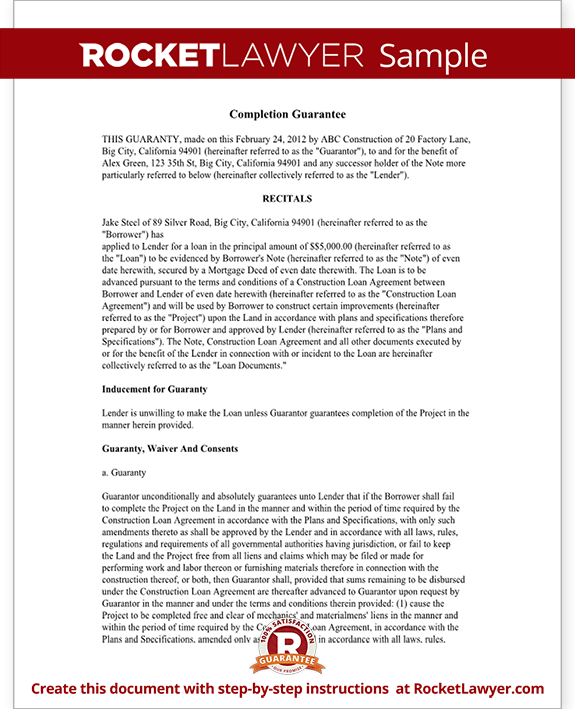
Here is an example of a completion guarantee form.
Regulation: Media regulatory bodies control what
media is produced and published to the public, this therefore means that the
public don’t see what they don’t want to see, all due to the work of regulatory
bodies. They also avoid scams and sharp practices being viewed by the public,
every media production goes through a regulatory body, this ensures that the
public only shows what has been cleared by a regulatory body.
OFCOM are the communications regulator in the UK. They are the people who decide what the people of the UK see and don’t see. They also ensure that what people are going to be viewing fits its time slot. For example: If something involves swearing, it isn’t shown until after 9:00pm. OFCOM’s main responsibility is seen to be to further the interests of citizens and of consumers. Doing this by appropriately promoting competition.
OFCOM are the communications regulator in the UK. They are the people who decide what the people of the UK see and don’t see. They also ensure that what people are going to be viewing fits its time slot. For example: If something involves swearing, it isn’t shown until after 9:00pm. OFCOM’s main responsibility is seen to be to further the interests of citizens and of consumers. Doing this by appropriately promoting competition.
The OFCOM website states that: “Meeting this duty is at the heart of everything we do” (Meaning the duty of promoting appropriate competition to residents of the UK) so ensuring that any media production that is produced, is correct, if not it will not be published, so the director of the production needs to ensure that he has met all the guidelines.

OFCOM's official logo.
The BBC is not regulated by OFCOM, this is due to the fact
that, the BBC is regulated by the BBC Trust. This is different to OFCOM due to
the fact that they are within the BBC and even share the same name. They claim
to make the decisions in the best interests of licence fee payers and protect
the independence of the BBC.

They also ensure that the BBC’s licensing fee is spent in the right way, this ensures that the BBC are not wasting the viewer’s money and are instead investing it in the correct manner. This is also different to OFCOM due to the fact that OFCOM cover more than one TV station, where as the BBC Trust cover solely the BBC, this allows the BBC to have a more one to one opinion on what they’re producing, this means that they can communicate regularly, therefore meaning that any issues can be ironed out quickly.
Here is The BBC's official logo.
They also ensure that the BBC’s licensing fee is spent in the right way, this ensures that the BBC are not wasting the viewer’s money and are instead investing it in the correct manner. This is also different to OFCOM due to the fact that OFCOM cover more than one TV station, where as the BBC Trust cover solely the BBC, this allows the BBC to have a more one to one opinion on what they’re producing, this means that they can communicate regularly, therefore meaning that any issues can be ironed out quickly.
The BBFC or British Board of Film Classification are responsible for the classification and censorship of films within the United Kingdom. They classify many forms of media. For example: Videos and DVD’s. They have to place them into a certain age range regarding what is shown on screen. This therefore allows only the target audience of a media production to view what is being produced. For example: The Inbetweeners movie was given a ‘15’ age rating, meaning that only people above the age of 15 were permitted to view it. This allows the people who the film is aimed at to enjoy it. This also means that people considered too young to view it aren’t thrown into something they are not going to be able to view and enjoy.

Here is the official poster for the 'Inbetweeners' movie
The
regulation of moving image products:
From my own research I have been able to expand my knowledge regarding
how media productions are regulated. I have been able to find it many new
things regarding this and I am surprised with some of the stuff in which I
found out.
Firstly, OFCOM deals with TV and radio audiences, ensuring
that both TV and radio viewers/listeners and being protected in the right way.
This includes protection from indecency, things not being to the viewers/listeners general ‘taste’, or even if the product is not invading their privacy. However, OFCOM only actually has control over material broadcasted over an analogue of digital signal.
This includes protection from indecency, things not being to the viewers/listeners general ‘taste’, or even if the product is not invading their privacy. However, OFCOM only actually has control over material broadcasted over an analogue of digital signal.
On the other hand, on-demand services are regulated in a
completely different way. They are instead, self-regulated by: The Association
for Television on Demand, their code however, does in fact broadly mirror
OFCOM’s code.

Here is perhaps the Uk's biggest on demand site. BBC Iplayer.
However, the ever rising popularity of online videos are virtually impossible to regulate, this is due to the fact that, anyone, anywhere in the world can make and upload a video online. With millions upon millions of videos being uploaded a day, it is truly a problem when trying to ensure that what everyone is viewing isn’t potentially harmful. Although, YouTube, is a good example of an online video provider, this is due to the fact that the site does not allow any form of explicit material. However, this cannot be removed until someone has reported a video to alert YouTube of the problem.
Since the start of the production of our Depict short. ‘Sweet dreams’ we have learnt a lot about the internet’s media regulations. The main thing in which we have learnt is that it is virtually impossible to regulate the media in which goes on to the internet. This therefore meant that ‘Sweet dreams’ would be able to publish on YouTube without raising an eyebrow. However, we needed to ensure that it was fitting to be able to be put onto the website, this meant that we had to ensure that we were producing something that was ‘clean’ as anyone can stumble across a YouTube video, this meant that we had to be extremely careful when producing our script.
Trade unions: A trade union is an organised association of workers. This can be either in a trade, group of trades or profession. These are formed to protect and further the interests of people working in a certain business. These are important in media, due to the fact that the mistreatment of people working in the media industry is common, especially in the lower, less glamorous parts, which is what we were working in, by producing a low budget, short movie.
A trade union can include help for things such as: negotiation of wages, work rules,complaint procedures. They can also help with the hiring and firing of employees. A trade union can help in this situation due to the fact that: If an employee of a media company is fired in a way which is unjust (such as due to their ethnicity or sex) then they have a case to take their employers to court to try and get some compensation. The same applies during the hiring process, if an applicant feels that they have been discriminated against and not received the job due to something such as their ethnicity then they can also be assisted by a trade union. Trade unions are there to help the people of the media industry when they need help, therefore causing the industry to be much fairer and run smoother all round.
A trade union is strictly to help the individual and their needs, not the corporation. This is what helps the individual as they can heave one to one help without having their company and employer involved.
Trade associations: A trade association is an association in which aims to help members of a certain trade, they do so by helping with hundreds of organisations and individual members from all sectors of creative media. This provides a valuable way to keep up with developments of an extremely fast moving sector. An industry trade association (such as PACT or BECTU) participates in public relations activities and ensuring that the organisations within them function correctly and can also help to offer other services such as: "producing conferences, networking or charitable events or offering classes or educational materials"
Almost all trade unions are heavily involved in publishing activities, this can be in the form or print and online.
Unlike trade unions, trade associations focus on companies in the sector rather than catering to the individuals needs. This means that the company as a whole can be helped rather than having to deal with smaller case (which a trade union can deal with) therefore meaning that issues and help for these issues can be implemented much quicker and on a much larger scale.
Trade associations can also help with advertising for the companies. This is due to the fact that they often advertise their whole association to show what it's about. This shows their sector in a positive light and may even feature someones business in it for free, meaning that the business gets free advertisement in a positive way.
PACT: The: Producers Alliance for Cinema and Television. They represent the commercial interests of UK independent productions. Such as: Film, digital television and children’s and animated media production companies. PACT helps to share the best possible regulatory and legislative environment for all independent production companies. This therefore gives the smaller companies a bigger and better chance or thriving so that they can grow and expand their audiences on to a much larger scale. They also boast a strong record of success in campaigning for Producers rights. PACT has been highly influential in the shaping of current television, as it gives independent UK producers their rights. In a short span of 10 years PACT has grown from a small Cottage industry to a world beating multi-million pound business. Finally, PACT works seeks to influence the wider industry to commit to diversity both on and off the screen.
A trade union is strictly to help the individual and their needs, not the corporation. This is what helps the individual as they can heave one to one help without having their company and employer involved.
Trade associations: A trade association is an association in which aims to help members of a certain trade, they do so by helping with hundreds of organisations and individual members from all sectors of creative media. This provides a valuable way to keep up with developments of an extremely fast moving sector. An industry trade association (such as PACT or BECTU) participates in public relations activities and ensuring that the organisations within them function correctly and can also help to offer other services such as: "producing conferences, networking or charitable events or offering classes or educational materials"
Almost all trade unions are heavily involved in publishing activities, this can be in the form or print and online.
Unlike trade unions, trade associations focus on companies in the sector rather than catering to the individuals needs. This means that the company as a whole can be helped rather than having to deal with smaller case (which a trade union can deal with) therefore meaning that issues and help for these issues can be implemented much quicker and on a much larger scale.
Trade associations can also help with advertising for the companies. This is due to the fact that they often advertise their whole association to show what it's about. This shows their sector in a positive light and may even feature someones business in it for free, meaning that the business gets free advertisement in a positive way.
PACT: The: Producers Alliance for Cinema and Television. They represent the commercial interests of UK independent productions. Such as: Film, digital television and children’s and animated media production companies. PACT helps to share the best possible regulatory and legislative environment for all independent production companies. This therefore gives the smaller companies a bigger and better chance or thriving so that they can grow and expand their audiences on to a much larger scale. They also boast a strong record of success in campaigning for Producers rights. PACT has been highly influential in the shaping of current television, as it gives independent UK producers their rights. In a short span of 10 years PACT has grown from a small Cottage industry to a world beating multi-million pound business. Finally, PACT works seeks to influence the wider industry to commit to diversity both on and off the screen.

The official logo of PACT
BECTU: Is the
UK’s media and entertainment trade union. It has sectors in broadcasting, film
and independent production. The union represents staff, contract and freelance
workers who are based primarily within the United Kingdom. The key aims of BECTU are: To help protect as
many jobs within the industry as possible. To increase membership in BECTU,
this will then allow them to grow more and more every time someone new joins
them. They also aim to improve the pay and conditions in the industry.
Including pensions. This will therefore mean that firstly, the people already
in the industry will be much happier not only now but also in their later life.
Secondly, this will then add a higher attraction to the industry, meaning that
the industry will then grow as a whole.

The official logo of BECTU


